 Kibernan
Before You Turn a 60% Interceptor Estimate Into a Production Target, Budget Its Uncertainty
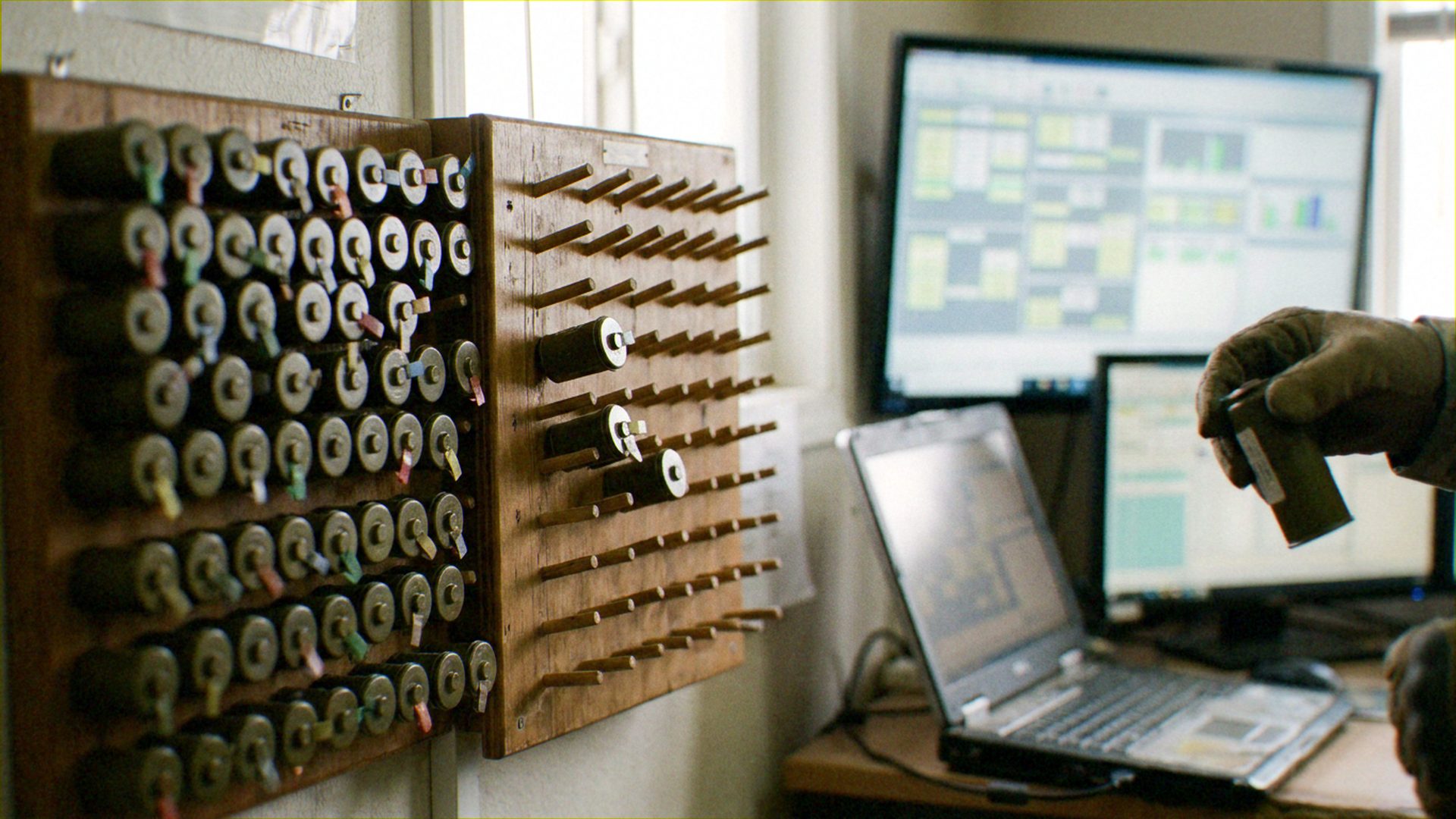
Almost 2,800 Patriot and THAAD interceptors sat in the Pentagon's worldwide inventory when the war began, according to a study by the Center for Strategic and International Studies. U.S. forces used almost 60% of the national inventory of Patriot and THAAD interceptors. Defense Department officials refused to confirm, deny, or discuss those figures. That refusal matters.
I take the estimate seriously. What I do not take seriously is the reflex that follows it: round the estimate into a requirement, and the requirement into committed capital. Manufacturers are already being pushed to increase interceptor production sharply, even as sprawling supply chains complicate the ramp and concerns remain about preserving advanced weapons for other potential conflicts. That pressure turns estimates into targets fast, and targets into tooling faster. I would not turn the 60% figure into a production target until its uncertainty is budgeted as explicitly as its dollars.
What Kind Of Number Is 60 Percent
Start with what the number is. It is a reported figure that Defense Department officials refused to confirm, deny, or discuss. A figure of that kind arrives as a distribution even when it is printed as a point.
The department's silence has a second-order effect that matters more than the number itself. Because nobody official will confirm or correct the figure, nobody outside can reconcile it against expenditure records, and nobody inside is obliged to publish an error band. The estimate circulates unopposed, and unopposed numbers acquire false authority through repetition alone. Six months from now it will appear in requirement documents stripped of the word almost.
An estimate is a distribution. A production target is a point. The entire discipline of industrial planning lives in the gap between those two things, and the gap is where capital goes to die. Before anyone sizes a production line, planners need an uncertainty range for the reported expenditure estimate.
Five Unknowns Collapsed Into One Output Number
To convert that estimate into an annual output requirement, a planner has to make at least five separate calls, and every one of them is currently a guess. First, usable inventory: how many of the remaining rounds are certifiable for launch rather than merely present in the count. Second, expenditure: whether the reported burn represents steady-state demand or a one-time surge that will not repeat. Third, supplier yield: what fraction of components clears test at each tier of a supply chain the trade coverage itself calls sprawling.
Fourth, replacement lead time: how long each interceptor actually takes from order to delivery once the queue in front of it is honored. Fifth, acceptance capacity: how fast the government side can inspect and take delivery, a constraint planners reliably forget because it sits on their own side of the fence. The claims ledger does not supply values or auditable error bands for those five inputs.
The standard move is to pick a point value for each, multiply them together, and print one annual number. The output looks authoritative precisely because the uncertainty was deleted, not resolved. That is false precision, and it is manufactured upstream of every dollar.
The Arithmetic Of Compounded Error
Run the arithmetic on the structure itself. Suppose each of the five inputs carries a modest 20% uncertainty and the errors are independent. In a multiplicative model the relative uncertainties combine in quadrature, so the output carries roughly the square root of five times 20%, which is about 45%. Nearly half the answer is noise before anyone has argued about a single input.
Independence is the generous assumption. In practice the errors correlate, because one shortage propagates through several tiers at once and one optimistic planning factor tends to travel with four others. Fully correlated, the errors multiply: 1.2 raised to the fifth power is roughly 2.5. A plan built on that number can be wrong by a factor of two and a half while every individual input looked only modestly uncertain.
Tooling for the wrong rate is expensive in both directions. Size the line too low and you re-fight the shortage you were funded to fix. Size it too high and you carry idle capacity that shows up in every future unit cost. Either way, the error was purchased at the moment the point value was chosen.
What Committed Capital Costs When The Model Is Wrong
The record on committing capital ahead of evidence is not encouraging. The Pentagon canceled the $6.27 billion OCX program this year after 15 years of development. Fifteen years and six billion dollars is what unexamined assumptions cost when nobody forces them to mature on a schedule.
That pattern repeats at larger scale. The GAO said the Defense Department plans to invest at least $50 billion in developing, testing, producing, and fielding Conventional Prompt Strike capability across several programs. The Navy and Army largely manage their investment decisions for these programs separately, contributing to inefficiencies and delays. Unknowns held in separate ledgers never get composed, and uncomposed unknowns are exactly how a 45% error band hides in plain sight.
Target-setting under shock is the sharpest version of the problem. After Iran shot down at least 45 MQ-9A Reapers, the Air Force shortened its Massed Modular Aircraft schedule from a 2031 target to roughly three years. The Air Force is pursuing a fleet of 180-plus drones at $10 million per unit. The acceleration may prove right. But a point target announced under pressure inherits every unexamined assumption beneath it, and the schedule risk now lives in whichever subsystem nobody is tracking.
Speed itself is not the objection. Frankenburg Technologies began developing its compact, low-cost Mark I interceptor in 2024. The company has since moved the system into production. Nothing in that story, though, licenses the same schedule assumption for high-end interceptors with multi-tier supply chains. Different problem class, different distribution.
Tag Every Figure And Stage The Capital
The fix is boring, which is why it works. Tag every figure in the plan with its maturity. Modeled means it came out of a simulation or an analyst's estimate. Specified means someone with authority wrote it into a requirement. Calculated means it derives from measured inputs through arithmetic a reviewer can audit. Objective means it was observed in the real world.
Under that convention the 60% figure is modeled. The 2,800 baseline is modeled. Every production number derived from them inherits the weakest tag in its chain, and the plan says so on its face instead of burying the caveat in an appendix nobody reads.
Then stage the capital against the tags. Long-lead items whose value survives across the whole plausible range can be bought now. Rate tooling waits until yield and lead-time figures move from modeled to calculated. Full line commitment waits for objective expenditure data or a specified requirement with a cost basis behind it. Capital hardens as evidence hardens, and never ahead of it.
An Existence Proof, Not A Pitch
I hold my own company to the same rule, so I will state it plainly rather than sell it. Kibernan has produced six complete, costed engineering programs: AI Managed Missile Factory, AEGIS-ARGUS-KRONOS, IRON HIVE, DRONE WALL, FANGS, and VES. Every published figure in those programs carries its maturity: modeled, specified, calculated, or objective. They are proposals. No Kibernan hardware has been built or fielded, and we say so in writing, because claiming otherwise would be exactly the false precision this article is about.
If the convention holds for proposals, it can hold for a national interceptor plan. The 60% estimate deserves to drive investment. It does not yet deserve to be a production target, and the distance between those two states is a budget line for uncertainty. Write the error bars into the appropriation with the same discipline you write the dollars. Then build.